
Grafites apotropaicos e materialidade
Uma perspectiva pós-colonial nos espaços escritos
DOI:
https://doi.org/10.34024/herodoto.2022.v7.15467Palavras-chave:
Epigrafia romana, Pompeia, Arqueologia pós-colonialResumo
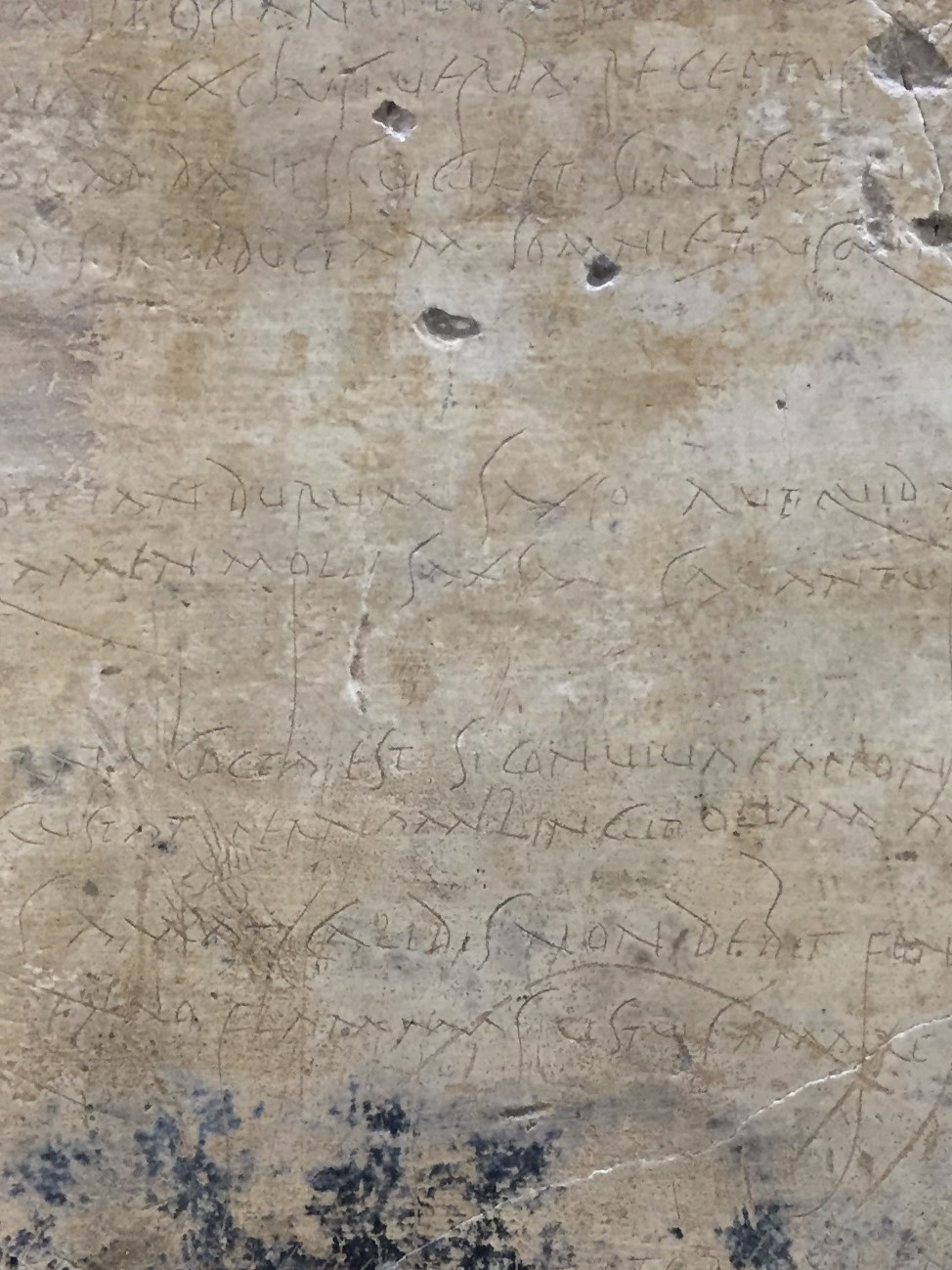
Construído a partir das teorias arqueológicas pós-coloniais e de um estudo anterior sobre grafites apotropaicos de um dos autores, neste artigo discutimos a importância de deste corpus de grafites como fonte para um estudo de gênero sobre o cotidiano romano. O objetivo deste artigo é, portanto, distinto do que o inspirou, mudando a perspectiva para a importância do espaço da escrita para repensar a identidade romana no início do Principado. Argumentaremos que espaços da escrita, quando analisados a partir de sua materialidade, se torna evidência para a discussão de conflitos sociais, identidade e diversidade na sociedade romana. Também permitem uma leitura mais balanceada do Império, levando em consideração as diferentes visões de mundo das pessoas de origem humilde.
Métricas
Downloads
Referências
Abreviações das edições das fontes Primárias
CIL Corpus Inscriptionum Latinarum (Berlin, 1863–).
Bibliografia Citada
ADAMS, James Noel. The Latin Sexual Vocabulary. Londres: Duckworth, 1987.
ALFÖLDY, Geza. La cultura epigráfica de los romanos: la diffusion de un medio de comunicación y su papel en la integración cultural. In: REMESAL RODRIGÉS, Jose et al. (eds). Vivir en tierra extraña: emigración e integración cultural en el mundo antiguo. Barcelona: Universitat Barcelona, 2003, p. 137-149,
BAIRD, Jennifer; TAYLOR, Claire (eds). Ancient Graffiti in Context. Nova York: Routledge, 2011.
BARBET, Alix. La représentation des gladiateurs dans la peinture murale romaine. In: Les gladiateurs: Lattes, 26 mai-4 juillet 1987; Toulouse, 13 juillet-début septembre 1987: exposition / conçue et réalisé par le Musée archéologique de Lattes. Lattes: Imago, 1987, p. 69-74.
BING, Peter; COHEN, Rip (eds). Games of Venus. An Anthology of Greek and Roman Erotic Verse from Sappho to Ovid. Londres: Routledge, 1991.
BOARDMAN, John. The Phallos-Bird in Archaic and Classical Greek Art. Revue Archéologique, 2, 1992, p. 227–242.
BOWMAN, Alan; WOOLF, Greg (eds). Literacy and Power in the Ancient World. Cambridge: Cambridge University Press, 1998.
CANTARELLA, Eva. Secondo natura. La bisessualità nel mondo antico. Roma: Riuniti, 1988.
CEBE, Jean-Pierre. La caricature et la parodie dans le monde romain antique des origines à Juvenal. Paris: De Boccard, 1966.
DUBUISSON, Michel. Le Grec à Rome à l’époque de Cicéron. Extension et qualité du bilinguisme, Annales, 1, 1992, p. 187–206.
FEITOSA, Lourdes Conde. Amor e sexualidade: o masculino e o feminino em grafites de Pompéia. São Paulo: Annablume; Fapesp, 2005.
FUNARI, Pedro Paulo. Cultura(s) dominante(s) e cultura(s) subalterna(s) em Pompéia: da vertical da cidade ao horizonte do possível. Revista Brasileira de História, 7, (13), 1986, p. 33–48.
FUNARI, Pedro Paulo. Cultura Popular na Antigüidade Clássica. São Paulo: Contexto, 1989.
FUNARI, Pedro Paulo. Dressel 20 Amphora Inscriptions Found at Vindolanda: The Reading of the Unpublished Evidence. In: MAXFIELD, Valerie; DOBSON, Michel (eds). Roman Frontier Studies 1989: Proceedings of the XVth International Congress of Roman Frontier Studies. Exeter: University of Exeter Press, 1991, p. 65–72.
FUNARI, Pedro Paulo. Graphic Caricature and the Ethos of Ordinary People at Pompeii. Journal of European Archaeology, 2, 1993, p. 131–148.
FUNARI, Pedro Paulo. Bretanha romana – Estudos recentes sobre a Arqueologia da Bretanha romana. Revista de História da arte e Arqueologia, 1, 1994, p. 249–252.
FUNARI, Pedro Paulo. O pensamento popular nas inscrições parietais pompeianas. Boletim do Centro do Pensamento Antigo, 16, 2003, p. 101–118.
GARRAFFONI, Renata Senna. Gladiadores na Roma Antiga: dos combates às paixões cotidianas. 2ª Edição revisada e ampliada. Curitiba: Editora da UFPR, 2021.
GARRAFFONI, Renata Senna. Gladiators Daily Lives and Epigraphy: A Social Archaeological Approach to the Roman munera During the Early Principate. Nikephoros: Zeitschrift für Sport und Kultur im Altertum, 21, 2008, p. 223–241.
GARRAFFONI, Renata Senna; LAURENCE, Ray. Writing in Public Space from Child to Adult: The Meaning of Graffiti. In: SEARS, Gareth; KEEGAN, Peter; LAURENCE, Ray (eds). Written Space in the Latin West, 200BC to AD300. Londres: Bloomsbury, 2013, p. 123-134.
GARRAFFONI, Renata Senna; SILVA, Lorena Pantaleão. O feminino adentra a arena: mulheres e a relação com o as lutas de gladiador na Roma imperial. Caminhos da História (UNIMONTES), v. 15, 2010, p. 61-83.
GARRAFFONI, Renata Senna; FUNARI, Pedro Paulo. Reading Pompeii’s Walls: A Social Archaeological Approach to Gladiatorial Graffiti. In: WILMOTT, Tony (ed.). Roman Amphitheatres and Spectacula: A 21st Century Perspective. Oxford: Archaeopress, 2009, p. 185–193.
GARRAFFONI, Renata Senna. Subaltern masculinities: Pompeian graffiti and excluded memories in the early Principate. In. COURRIER, Cyrril; OLIVEIRA, Julio César Magalhães de (eds.). Ancient History from below – subaltern experiences and actions in context. Londres: Routledge, 2022, p. 175-192.
GICHON, Moderchai. Who Were the Enemies of Rome on the Limes Palestinae ?. Studien zu den Militärgrenzen Roms III: 13. Internationaler Limeskongress, Aalen 1983. Vorträge, Stuttgart: Kommissionsverlag K. Theiss, 1986, p. 584–592.
GILMORE, David. Men and Women in Southern Spain: "Domestic Power" Revisited. American Anthropology, 92 (4), 1990, p. 953–970.
GOLD, Barbara. But Ariadne Was Never There in the First Place: Finding the Female in Roman Poetry. In: RABINOWITZ, Nancy; RICHLIN, Amy (eds). Feminist Theory and the Classics. Londres: Routledge, 1993, p. 75–101.
GOUREVITCH, Aaron. La science historique et l'anthropologie. Sciences Sociales, 3, 1991, p. 113–138.
GRIG, Lucy. Approaching Popular Culture in the Ancient World. In GRIG, Lucy (ed.). Popular Culture in the Ancient World. Cambridge: Cambridge University Press, 2017, p. 1–36.
GRIMAL, Pierre. Les Jardins romains. Paris: Presses Universitaires de France, 1969.
HUGONIOT, Christophe. Saint Augustin et les spectacles de l'amphithéâtre en Afrique romaine. Histoire de l'Art, 17/8, 1992, p. 11–21.
JOHNS, Catherine. Sex or Symbol, Erotic Images of Greece and Rome. Londres: British Museum Publications, 1982.
JORDAN, David. Curses From the Waters of Sulis. Journal of Roman Archaeology, 3, 1990, p. 437–441.
KEEGAN, Peter. Blogging Rome: Graffiti as Speech-Act and Cultural Discourse. In BAIRD, Jennifer; TAYLOR, Claire (eds). Ancient Graffiti in Context. Nova York: Routledge, 2011.
KUENZEL, Rudi. Paganisme, syncrétisme et culture religieuse populaire au Haut Moyen Age, réflexions de méthode. Annales, 4-5, 1992, p. 1055–1069.
LAMBERTERIE, Charles de. Le verbe binein et le nom de la Femme. Revue de Philologie, 65, (1), 1991, p. 149–160.
LANGNER, Martin. Antike Graffitizeichnungen – Motive, Gestaltung und Bedeutung. Wiesbaden: Ludwig Reichert, 2001.
LOPES BARJA, Pedro. Epigrafia Latina, Santiago: Tórculo Artes Gráficas, 1987.
MACMULLEN, Ramsay. The Epigraphic Habit in the Roman Empire. The American Journal of Philology, 103, 1982, p. 233–246.
MACMULLEN, Ramsay. Changes in the Roman Empire. Essays in the Ordinary. Princeton: Princeton University Press, 1990.
MEYER, Elizabeth. Explaining the Epigraphic Habit in the Roman Empire: The Evidence of Epitaphs. Journal of Roman Studies, 80, 1990, p. 74–96.
MONTERO, Enrique. El Latín erótico. Aspectos léxicos y literarios (hasta el siglo I d.C.). Sevilha: Universidad de Sevilla, 1991.
PINA-CABRAL, João de. Tamed Violence: Genital Symbolism in Portuguese Popular Culture. Man, New Series, 28 (1), 1993, p. 101–120.
RICHLIN, Amy. The Garden of Priapus. Sexuality and Aggression in Roman Humor. Nova Haven: Yale University Press, 1983.
SABBATINI TUMOLESI, Patrizia. Gladiatorum paria: annunci di spettacoli gladiatorii a Pompei. Roma: Edizioni di storia e letteratura, 1980.
SABBATINI TUMOLESI, Patrizia. Epigrafia anfiteatrale dell’Occidente romano. 1, Roma. Roma: Edizioni Quasar, 1988.
SAVUNEN, Liisa. Women and Election in Pompeii. In: HAWLEY, Richard; LEVICK, Barbara (eds). Women in Antiquity: New Assessments. Londres; Nova York: Routledge, 1995, p. 194–206.
SHANKS, Michel; HODDER, Ian. Processual, Postprocessual and Interpretive Archaeologies. In: WHITLEY, David (ed.). Reader in Archaeological Theory: Post-processual and Cognitive Approaches. Londres: Routledge, 1998, p. 69–94.
TUPET, Anne-Marie. Rites magiques dans l'antiquité‚ romaine. Aufstieg und Niedergang der römischen Welt, 16, (3), 1986, p. 2591–2675.
UCKO, Peter J. Archaeological Interpretation in a World Context. In: UCKO, Peter J. (ed.). Theory in Archaeology: A World Perspective. Londres: Routledge, 1995, p. 1–27.
VÄÄNÄNEN, Veikko. Le latin vulgaire des inscriptions pompéiennes, [ser.] B. XL, 2 . Helsinki: Annales Academiae scientiarum fennicae, 1937.
VAN DOMMELEN, Peter. Colonial Constructs: Colonialism and Archaeology in the Mediterranean. World Archaeology, 28, (3), 1997, p. 305–323.
MAULUCCI VIVOLO, Francesco Paolo. Pompei: i graffiti figurati. Foggia: Bastogi, 1993.
VOSS, Barbara; SCHMIDT, Robert. Archaeologies of Sexuality: An Introduction. In: VOSS, Barbara; SCHMIDT, Robert (eds). Archaeologies of Sexuality. Londres; Nova York: Routledge, 2000, p. 1–32.
VOSSLER, Karl. Einführung ins Vulgärlatein. Munich: Hueber, 1954.
WEEBER, Karl-Wilhelm. Panem et circenses: Massenunterhaltung als Politik im antiken Rom. Mainz am Rhein: Philipp von Zabern, 1996.
WILLIAMS, Craig. Roman Homosexuality. Ideologies of Masculinity in Classical Antiquity, Ideologies of Desire. Oxford: Oxford University Press, 1999.
Downloads
Publicado
Edição
Seção
Licença
Copyright (c) 2023 Heródoto: Revista do Grupo de Estudos e Pesquisas sobre a Antiguidade Clássica e suas Conexões Afro-asiáticas

Este trabalho está licenciado sob uma licença Creative Commons Attribution-NonCommercial-NoDerivatives 4.0 International License.
Autores que publicam nesta revista concordam com os seguintes termos:
- Autores mantém os direitos autorais e concedem à revista o direito de primeira publicação, com o trabalho simultaneamente licenciado sob aLicença Creative Commons Attribution que permite o compartilhamento do trabalho com reconhecimento da autoria e publicação inicial nesta revista.
- Autores têm autorização para assumir contratos adicionais separadamente, para distribuição não-exclusiva da versão do trabalho publicada nesta revista (ex.: publicar em repositório institucional ou como capítulo de livro), com reconhecimento de autoria e publicação inicial nesta revista.
- Autores têm permissão e são estimulados a publicar e distribuir seu trabalho online (ex.: em repositórios institucionais ou na sua página pessoal) a qualquer ponto antes ou durante o processo editorial, já que isso pode gerar alterações produtivas, bem como aumentar o impacto e a citação do trabalho publicado (Veja O Efeito do Acesso Livre).