
O Culto e a destruição das estátuas antigas nas sociedades árabe-islâmicas contemporâneas
Historiografia, identidade e patrimônio
DOI:
https://doi.org/10.34024/herodoto.2024.v9.20080Keywords:
Recepção, Islã, Iconoclastia, Medieval, Nacionalismo, Colonialismo, OrientalismoAbstract
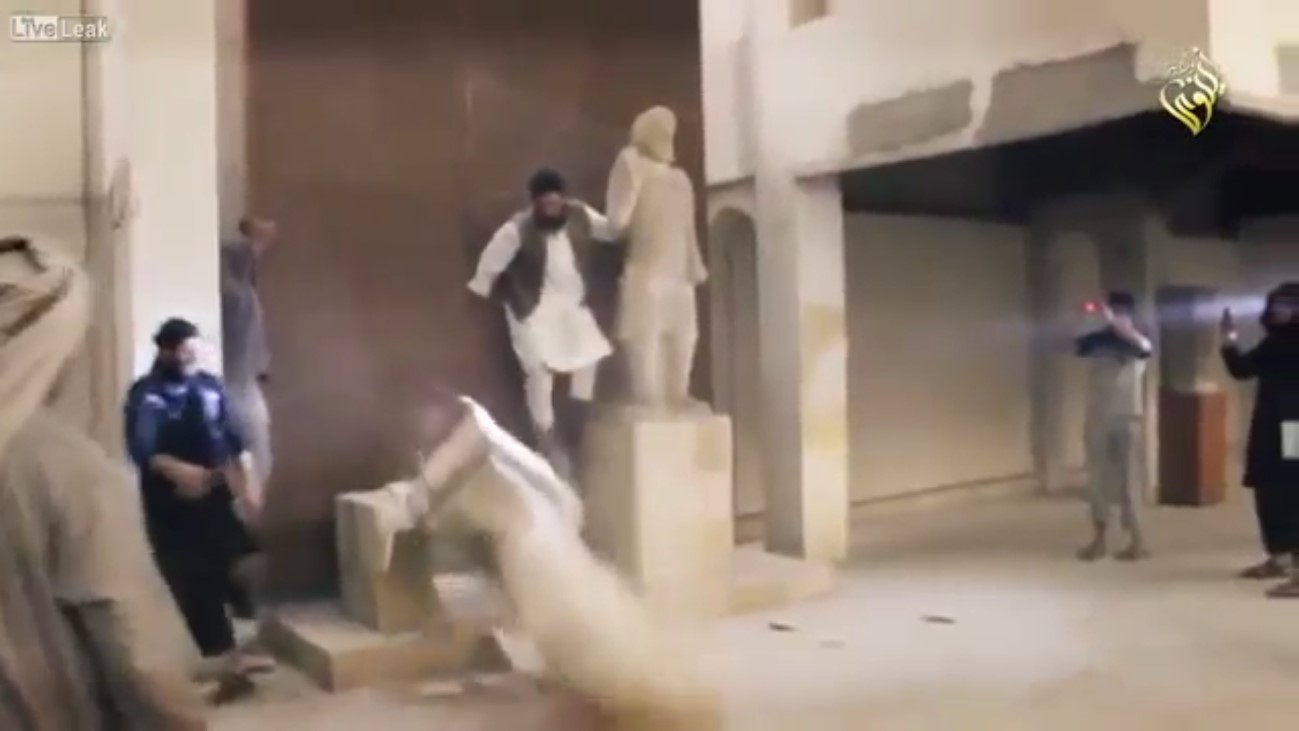
Este trabalho analisa a recepção das estátuas antigas nas sociedades árabe-islâmicas considerando seis estudos de caso que evidenciam seu valor e vigência, da época medieval até os dias atuais: a construção de uma estátua faraônica, de Ramsés II, no Cairo, durante o governo de Nasser, e sua recente transferência, entre as massas, ao novo museu arqueológico; a descoberta de uma estátua de Dario, em 1972, em Susa e seu papel simbólico como peça de destaque do museu arqueológico de Teerã; a estátua moderna de Zenóbia e sua exibição em Damasco, no ano de 2015, no contexto da guerra civil na Síria; a construção de uma estátua dedicada a Kahina, em 2003, no território argelino de Baghai e seu incêndio, em 2016, resultante de conflitos políticos e religiosos entre comunidades (árabes e berberes) e países (Argélia e França); o vídeo de destruição do Museu Arqueológico de Mossul gravado pelos militantes do DAESH em 2015; a exibição inaugural do Abu Dabi Louvre Museum, em 2017, com uma destacada presença da estatuária clássica. A estátua desempenha um papel determinante na reafirmação identitária de certos coletivos ou regimes políticos, e seu significado se constrói tanto a partir de discursos historiográficos ancorados no suposto rechaço, por parte do Islã, às representações figuradas quanto pelo conjunto de respostas que a estatuária suscita. Venerada ou destruída, a estátua forma parte de uma onda iconoclasta atual e que ressoa sobre os debates globais sobre o patrimônio, as identidades, sua representatividade e a revisão da História.
Metrics
Downloads
References
ABDI, Kaymar. Nationalism, Politics, and the Development of Archaeology in Iran. American Journal of Archaeology 105 (1), 2001, p. 51-76.
AL-BAKRĪ, Description de l'Afrique Septentrionale par Abou-Obeïd-El-Bakri, trad., de Mac Guckin De Slane. París: Maisonneuve, 1965.
AL-BUSTĀNĪ, Salīm. Zanūbyā malikat Tadmur. Al-Jinān 1–24, 1870–1871.
ALI, Ali. How Raqqa, once the Syrian capital of Daesh’s caliphate, reclaimed its Arab cultural pride. Arab News. 15 de octubre de 2022. Disponible en: https://www.arabnews.com/node/2181736/amp
AL-MASʿŪDī, Murūǧ al-ḏahab, ed. Qāsim al-Samā῾ī al-Rufā῾ī. Beirut: Dār al-Qalam, 1989.
AL-ṬABARĪ, Taʼrīḥ al-rusul wa-l-mulūk, ed. M. J. de Goeje. Leiden: Brill, 1879-1901.
AMATO, Alain. Monuments en exil. Paris, Éditions de l'Atlanthrope, 1979.
ANÓNIMO. Zanūbyā. Al-ʿArab 14, Beirut: Dār al-ʿAwda, Series: Abta, 1975.
ANÓNIMO. Une statue à l’effigie d’Aksil à Ouzellaguen. 19 de enero de 2014. Disponible en: http://horizonsouzellaguen.centerblog.net/29.html
ANÓNIMO. Erasing the legacy of a ruined nation. Dabiq 8 2015, p. 22-24.
ANÓNIMO. Statue of ‘iconic Amazigh king’ Massinissa unveiled in Algiers. Amazigh World News. 1 de noviembre de 2019. Disponible en: https://amazighworldnews.com/statue-of-iconic-amazigh-king-massinissa-unveiled-in-algiers/
ANÓNIMO. Iran displays ancient clay tablets, returned by US, from empire that freed Jews. Time of Israel. 3 de octubre de 2019. Disponible em: https://www.timesofisrael.com/iran-displays-ancient-clay-tablets-returned-by-us-from-empire-that-freed-jews/
ANÓNIMO, Iconic Ferdowsi statue in Tehran to undergo meticulous restoration. Tehran Times. 11 septiembre de 2022. Disponible en: https://www.tehrantimes.com/news/476635/Iconic-Ferdowsi-statue-in-Tehran-to-undergo-meticulous-restoration
BAYOUMI’, Amr. Where did Ramses go?. 2019.
BECKER, Cynthia. The Kahina: The Female Face of Berber History. Mizan Project. 26 de octubre de 2015. Disponíble en: https://mizanproject.org/the-kahina-the-female-face-of-berber-history/#_ftn2
BECKER, Cynthia. “Visual Culture and the Amazigh Renaissance in North Africa and Its Diaspora.” In: VAN NIEUWKERK, Karin, LEVINE, Mark y STOKES, Martin, (eds.), Islam and Popular Culture. Austin: University of Texas Press, 2016, 100-121.
DE CORTE, Jan., Piercing the Cultural Diplomacy Veil: The Case of the Louvre Abu Dhabi, University of Antwerp. SSRN. 2019. Disponible en: https://ssrn.com/abstract=3733447
EL DALY, Okasha. Egyptology: The Missing Millennium Ancient Egypt in Medieval Arabic Writings. Londres: University College, 2005.
ELICES, Jorge. Respeto o barbarie: el islam ante la Antigüedad de al-Andalus a DAESH. Madrid: Marcial Pons, 2020a.
ELICES, Jorge. Caricaturas contra DAESH: construyendo y deconstruyendo Occidente, Oriente y el Islam, Roda da Fortuna. Revista Eletrônica sobre Antiguidade e Medievo 9 (2), 2020c, p. 75-94.
ELICES, Jorge. DA‘ESH’s Video in the Mosul Museum: Heritage Destruction or Heritage-Making?. In: CHRISTOFOLETTI R.; BOTELHO M.L. (eds) International Relations and Heritage. The Latin American Studies Book Series. Cham: Springer, 2021, p. 171-191.
ELSNER, Jas. Iconoclasm and the Preservation of Memory. In: NELSON, Robert y OLIN, Margaret, (eds) Monuments and memory, made and unmade. University of Chicago Press, Chicago, 2003, p. 209-232.
FLOOD, Fibarr. Between cult and culture: Bamiyan, Islamic iconoclasm, and the museum. Art Bulletin 84 (4), 2002, p. 641–659.
FLOOD, Fibarr. Idol breaking as image making in the islamic state. Religion and Society: Advances in Research 7, 2016, p. 116–138.
FRANTZMAN, Seth J. The Louvre Abu Dhabi: the best – and worst – of globalisation. The Spectator, 20 noviembre 2017. Disponible en: https://www.spectator.co.uk/article/the-louvre-abu-dhabi-the-best-and-worst-of-globalisation/
GASMI, Fouad. Les autorites locales de baghai doivent proteger et restaurer la statue. 2016. Disponible en: https://www.lematindz.net/news/21606-fouad-gasmi-les-autorites-locales-de-baghai-doivent-proteger-et-restaurer-la-statue-de-dihya.html
GONZÁLEZ, José Antonio y MUNAWAR, Nour. The unfallen statues of Hafez Al-Assad in Syria. City 24 (3-4), 2020, p. 642–655.
GREENHALGH, Michael. ‘Travelers’ Accounts of Roman statuary in the Near East and North Africa: From Limbo and Destruction to Museum Heaven. In: KRISTENSEN, Troels M. y STIRLING, Lea, (eds.), The Afterlife of Greek and Roman Sculpture: Late Antique Responses and Practices. Ann Arbor: University of Michigan Press, 2016, p. 330-348.
GRUBER, Christiane. The Image Debate: Figural Representation in Islam and Across the World. Berkeley, CA: Gingko Library, 2019.
HANNOUM, Abdelmajid. Historiography, Mythology and Memory in Modern North Africa: The Story of the Kahina. Studia Islamica 85, 1997, p. 85–130.
HANNOUM, Abdelmajid. Colonial Histories, Post-Colonial Memories: The Legend of the Kahina, A North African Heroine. Portsmouth, Heinemann, 2001.
HARMANSHAH, Ömür. DA‘ESH, heritage, and the spectacles of destruction in the global media. Near East Archaeol 78 (3), 2015, p. 170–177.
HENDRICKX, Benjamin. Al-Kahina: The Last Ally of the RomanByzantines in the Maghreb Against the Muslim Arab Conquest?. Journal of Early Christian History 3 (2), 2013, p. 47-61.
IMANPOUR, Mohammad-Taqi. Re-establishment of Achaemenid History and its Development in the Nineteenth and Twentieth Centuries, Iranian Studies 48 (4) 2015, p. 515-530.
JONES, Christopher. Understanding ISIS’s Destruction of Antiquities as a Rejection of Nationalism. Journal of Eastern Mediterranean Archaeology and Heritage Studies 6 (1-2), 2018, p. 32-58.
JONES, Christopher. Zenobia in Damascus: The Role of Classical Archaeology in Syrian Politics. 24 de julio de 2023. Disponible en: https://www.helsinki.fi/en/researchgroups/ancient-near-eastern-empires/news/zenobia-in-damascus-the-role-of-classical-archaeology-in-syrian-politics
KERVRAN, Monique. Une statue de Darius découverte à Suse. Le context archéologique. Journal asiatique 260, 1972, p. 235-239.
KINNEY, Dale. Spolia. Damnatio and renovatio memoriae. Memoirs of the American Academy in Rome 42, 1997, p. 117-148.
KOLRUD, Kristine y PRUSAC, Marina. Iconoclasm from antiquity to modernity. Ashgate, Burlington, 2014.
LAWLER, Andrew. Iran Reopens Its Past. Science 302 (5647), 2003, p. 970-973.
TIME. Iran. 20th-Century Darius. Time. 25 de abril de 1938. Disponible en: http://content.time.com/time/magazine/article/0,9171,931008,00.html
LERMAN, Eran. Abdel Fattah el-Sisi and the
Re-Pharaonization of Egypt. The Jerusalem Strategic Tribune. Mayo 2022. Disponible en: https://jstribune.com/lerman-re-pharaonization-of-egypt/
LOUNÈS, B. Les chaouis restaurent la statue de La kahina à Khenchela. Tamurt. 16 de Agosto de 2016. Disponible en: https://tamurt.info/les-chaouis-restaurent-la-statue-de-la-kahina-a-khenchela/
M.K. Edification d’une statue du roi berbère Sheshonq à Tizi Ouzou: la Libye réagit. Algerie Patriotique, 15 de enero de 2021. Disponible en: https://www.algeriepatriotique.com/2021/01/15/edification-dune-statue-du-roi-berbere-sheshonq-a-tizi-ouzou-la-libye-reagit/
MANAL. Statue of Palmyra queen Zenobia in Damascus for four days, Syrian Arab News Agency. 6 de septiembre de 2015. Disponible en: https://sana.sy/en/?p=53820
MARK, Joshua. Kahina: Early Medieval Berber Warrior-Queen Standing against Arab Invasion. 19 de febrero 2019. Disponible en: https://brewminate.com/kahina-early-medieval-berber-warrior-queen-standing-against-arab-invasion/
MARTINS, Ivo dos Santos. Iran in Assen… An “intentional” exhibition?. 11 de septiembre de 2018. Disponible en:
https://persiababylonia.org/2018/09/11/iran-in-assen-an-intentional-exhibition/
MASOUMI, Parvaneh. Killing History. Iran Wire. 10 de marzo de 2015. Disponible en: https://iranwire.com/en/society/60933/
MODÉRAN, Yves. Kusayla, l’Afrique et les Arabes. In: BRIAND-PONSART, Claude (ed.), Identités et cultures dans l’Algérie antique. Actes du colloque international (Rouen, mai 2003). Rouen-L. Havre: Presses Universitaires de Rouen et du Havre, 2005, p. 423-457.
MODÉRAN, Yves. Kahena, Encyclopédie berbère, 2005. Disponible en: http://journals.openedition.org/encyclopedieberbere/1306
MohandKBL. Contre la statue du Pharaon Chachnaq à Tizi Ouzou. 2021. Disponible en: https://www.mesopinions.com/petition/politique/contre-statue-pharaon-chachnaq-tizi-ouzou/122450
MONFERRER, Juan Pedro. La 'Caída de Palmira' o la 'Historia de Zenobia y Gadiīma'contada por la tradición norarábiga. Anaquel de Estudios Árabes 23, 2012, p.-83-108.
MULDER, Stephanie. Imagining Antiquity in Islamic Societies. Bristol/Chicago: Intellect Books, 2022.
MUSEUM OF THE JEWISH PEOPLE. Queen of the Desert: The Amazing Story of “Jewish Khaleesi”. 14 de octubre de 2018. Disponible en: https://www.anumuseum.org.il/blog/dihya-al-kahina/
OUAMER-ALI, Tarik. Sheshonq Ier, le pharaon de Tizi Ouzou. 11 de enero de 2024. Disponible en: https://www.founoune.com/sheshonq-ier-le-pharaon-de-tizi-ouzou/
PERROT, Jean, (ed.). The Palace of Darius at Susa: The Great Royal Residence of Achaemenid Persia. Nueva York: I.B.Tauris & Co Ltd, 2013.
PERROT, Jean. How the Statue of Darius broke. In: PERROT, Jean, (ed.), 2013, The Palace of Darius at Susa: The Great Royal Residence of Achaemenid Persia. Nueva York: I.B.Tauris & Co Ltd, 2013, p. 176-177.
POWERS, David S. Demonizing Zenobia: the legend of al-Zabbāʼ in Islamic sources. En: MARGARITAI, Roxani, SABRA, Adam y SIJPENSTEIN, Petra (eds.) Histories of the Middle East: Studies in Middle Eastern Society, Economy and Law in Honor of A.L. Udovitch. Leiden-Boston: Brill, 2011, p. 127-182.
RAZMJOU, Shahrokh. Assessing the Damage: Notes on the Life and Demise of the Statue of Darius from Susa. Ars Orientalis 34, 2002, p. 81-104.
REID, Daniel Malcolm. Whose Pharaohs? Archaeology, Museums, and Egyptian National Identity from Napoleon to World War I. California: University of California Press, 2002.
REID, Daniel Malcolm. Contesting Antiquity in Egypt: Archaeologies, Museums & the Struggle for Identities from World War I to Nasser. Cairo: American University in Cairo Press, 2015.
ROE, Thomas. Letters of Sir Thomas Roe, and his correspondents, relating to his embassy in Turkey. Londres: Samuel Richardson, 1740.
RUPTLY (2015) 'Warrior Queen' Zenobia Statue Erected in Syria in Defiance of Islamic State. Dailymotion. Disponible en: https://www.dailymotion.com/video/x35g5w2
SANADJIAN, Manuchehr. Islamic Rule and the Pre-Islamic Blessing, the ‘Homecoming’ of the Cyrus Cylinder. Dialectical Anthropology 35 (4), 2011, p. 459-474.
SHAW, Wendy. Destroy your idols. X-Tra Contemp Art Q 18 (1), 2015, p. 73-94.
SIWEL. La statue de la reine Dihya incendiée à Baghaï: Le MAC réagit. Siwel. 12 de agosto de 2016. Disponible en: https://www.siwel.info/la-statue-de-la-reine-dihya-incendiee-a-baghai-le-mac-reagit_8595.html
SIWEL. La statue du héros amazigh Aksel (Koceila) vandalisée à quelques jours de son inauguration. Siwel. 24 de marzo de 2021. Disponible en: https://siwel.info/la-statue-du-hero-aksel-koceila-vandalisee-a-quelques-jours-de-son-inauguration_63186.html
SMITH, Laurajane. Uses of heritage. Londres: Routledge, 2006.
SOHRABI, Narciss. Memorialization of War between conflicts of interest before and after the Islamic Revolution: Public Art and Public Space in Iran. ARTis ON 7, 2018, p 161-170.
TENORIO, Mauricio. La historia en ruinas. El culto a los monumentos y su destrucción. Madrid: Alianza Editorial, 2023.
TLASS, Mustafa. Zenobia: the Queen of Palmyra. Damasco: Tlass.
VICENTE, Álex. ¿Qué busca Francia al exportar sus museos?. El País, 15 de diciembre de 2019. Disponible en: https://elpais.com/elpais/2019/12/13/ideas/1576241625_837560.html
WAKEFIELD, S Cultural heritage, transnational narratives and museum franchising in Abu Dhabi. Oxford/New York: Routledge, 2021.
WOLTERING, Robert. Zenobia or al-Zabbā’: The Modern Arab Literary Reception of the Palmyran Protagonist. Middle Eastern Literatures 17 (1), 2014, p. 25-42.
YOUTUBE, The Pharaohs’ Golden Parade, 2021. Disponible en: https://www.youtube.com/watch?v=bnlXW7KZl0c
Downloads
Published
License
Copyright (c) 2025 Heródoto: Revista do Grupo de Estudos e Pesquisas sobre a Antiguidade Clássica e suas Conexões Afro-asiáticas

This work is licensed under a Creative Commons Attribution-NonCommercial-NoDerivatives 4.0 International License.
Autores que publicam nesta revista concordam com os seguintes termos:
- Autores mantém os direitos autorais e concedem à revista o direito de primeira publicação, com o trabalho simultaneamente licenciado sob aLicença Creative Commons Attribution que permite o compartilhamento do trabalho com reconhecimento da autoria e publicação inicial nesta revista.
- Autores têm autorização para assumir contratos adicionais separadamente, para distribuição não-exclusiva da versão do trabalho publicada nesta revista (ex.: publicar em repositório institucional ou como capítulo de livro), com reconhecimento de autoria e publicação inicial nesta revista.
- Autores têm permissão e são estimulados a publicar e distribuir seu trabalho online (ex.: em repositórios institucionais ou na sua página pessoal) a qualquer ponto antes ou durante o processo editorial, já que isso pode gerar alterações produtivas, bem como aumentar o impacto e a citação do trabalho publicado (Veja O Efeito do Acesso Livre).