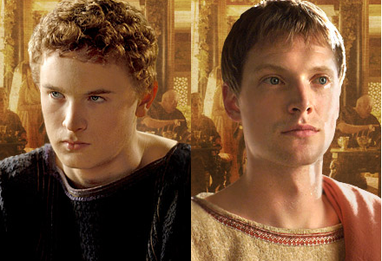
The Octavius ethos in the tv show Rome (HBO)
DOI:
https://doi.org/10.34024/herodoto.2019.v4.10963Keywords:
Ancient Rome, Classical Studies, Classical Reception, Octavian, Augustus, Ethos, Rome (HBO)Abstract
The present piece composes the framework known within the Classical Studies as a reception analysis, that is, a study that, as presented by Martindale (2006, p. 1-2), links the ancient world and other historical periods, showing that ancient discourses are not confined in their own time, having a complex chain of connections between them and the most diverse media, including television, as here uit is analyzed. In this process, it is emphasized that the relations between the old statements and their later appropriations are produced at the point of reception, in which the reader is essencial in the interpretive process. In this article, I look at the character Otavio from HBO's Rome series, seeking to highlight the application of an ethos proposed for the character, of an intelligent boy, prodigy, demonstrating an element already used in the Ancient literary tradition to make up the image of the future princeps. To do so, I use Bourdieu's concept of cultural capital to argue about the process of creating the show, and I also make use of some ancient texts, such as Suetonius' Life of Augustus and Cicero’s Phillipics.
Metrics
Downloads
Downloads
Published
Issue
Section
License
Autores que publicam nesta revista concordam com os seguintes termos:
- Autores mantém os direitos autorais e concedem à revista o direito de primeira publicação, com o trabalho simultaneamente licenciado sob aLicença Creative Commons Attribution que permite o compartilhamento do trabalho com reconhecimento da autoria e publicação inicial nesta revista.
- Autores têm autorização para assumir contratos adicionais separadamente, para distribuição não-exclusiva da versão do trabalho publicada nesta revista (ex.: publicar em repositório institucional ou como capítulo de livro), com reconhecimento de autoria e publicação inicial nesta revista.
- Autores têm permissão e são estimulados a publicar e distribuir seu trabalho online (ex.: em repositórios institucionais ou na sua página pessoal) a qualquer ponto antes ou durante o processo editorial, já que isso pode gerar alterações produtivas, bem como aumentar o impacto e a citação do trabalho publicado (Veja O Efeito do Acesso Livre).