Penélope e seu kéos na nova Odisseia de Margaret Atwood
DOI:
https://doi.org/10.34024/herodoto.2022.v7.14816Palavras-chave:
Odisseia, Penélope, Recepção de clássicos, Recepção feministaResumo
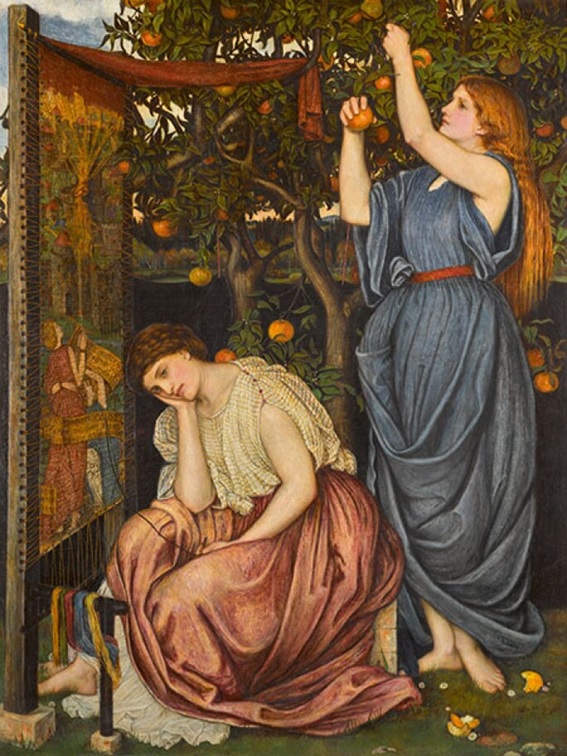
Este trabalho analisa a poesia épica antiga utilizada pela (e na) literatura contemporânea para a constituição de um tradição histórico-ficcional da feminilidade. Tal análise pretende desvendar um caso de recepção e a forma como ele funciona, uma vez que a recepção é um procedimento que cobre vastas possibilidades. Aqui, ela se dá dentro da literatura feminista com foco em Penélope - uma personagem que poderia ser vista enquanto uma alegoria da teoria da recepção como sugerido por Vanda Zajko (2011: 195) –, na releitura da Odisseia, The Penelopiad de Margaret Atwood (2005). Atwood usa uma conhecida história para examinar a avaliação que Penélope faz do próprio comportamento em relação à fama. Desejosa de uma boa reputação, a mulher que espera pacientemente por seu marido parece ainda ter medo de sua voz e de seu kléos.
Downloads
Referências
ANDÚJAR, Rosa. The Greek Trilogy of Luis Alfaro: Electricidad, Oedipus El Rey, Mojada. London: Bloomsbury Academic, 2020.
ASSUNÇÃO, Teodoro Rennó. Nota crítica à “bela morte” vernantiana. Classica. São Paulo, v. VII/ VIII, 1994-1995. p. 53-62.
ATWOOD, Margaret. The Penelopiad. Edinburgh; New York; Melbourne: Canongate, 2005.
ATWOOD, Margaret. The Penelopiad: The Play. London: Faber and Faber, 2007.
BRAUND, Susanna. ‘We’re here too, the ones without names.’ A study of female voices as imagined by Margaret Atwood, Carol Ann Duffy, and Marguerite Yourcenar. Classical Receptions Journal, V. 4, 2012, p. 190-208.
COLLINS, Shannon Carpenter. Setting the stories straight: A reading of Margaret Atwood’s The Penelopiad. Carson-Newman Studies, 11, 2006, p. 57-66.
DE JONG, Irene. A narratological commentary on the Odyssey. Cambridge, UK; New York: Cambridge University Press, 2001.
DETIENNE, Marcel. Qui veut prendre la parole ? Paris : Éditions du Seuil / Collection Le genre humain, 2003.
FLETCHER, Judith. J. Women’s space and wingless words in the Odyssey. Phoenix, 62, 2008, p. 77-91.
HALL, Edith. The Return of Ulysses. London and New York: I. B. Tauris, 2008.
HARDWICK, Lorna. Reception Studies. Oxford: Oxford University Press, 2003.
HAUSER, Emily. ‘There is another story’: writing after the Odyssey in Margaret Atwood’s The Penelopiad. Classical Receptions Journal, v. 10, 2018, p. 109-126.
KARAKANTZA, Effimia. Odysseia or Penelopeia? Mètis. Anthropologie des mondes grecs anciens, v. 12, 1997, p. 161-179.
LORAUX, Nicole. Notes sur un impossible sujet de l'histoire. Les cahiers du Grif, 37/38, 1988, p. 113-124.
MARTINDALE, Charles; THOMAS, Richard. Classics and the uses of reception. Oxford: Blackwell Publishing, 2006.
MARTINDALE, Charles. Redeeming the text: Latin poetry and the hermeneutics of reception. New York: Cambridge University Press, 1993.
NAGY, Gregory. Comparative Studies in Greek and Indie Meter. Harvard Studies in Comparative Literature, 33, 1974, p. 229-261.
OLSON, Douglas. Blood and iron: stories and storytelling in Homer’s Odyssey. Leiden; New York: E. J. Brill, 1995.
NIETZSCHE, Friedrich. Untimely Meditations. Edited by Daniel Breazeale. Translated by R. J. Hollingdale. Cambridge: Cambridge University Press, 2012.
SEGAL, Charles. Kleos and its Ironies in the Odyssey. L’Antiquité Classique, 52, 1983, p. 22-47.
PERALTA, Danel Padilla. Crises of Democracy at Columbia: Weaponizing the Classics (2019) Available at: https://www.youtube.com/watch?v=vjBs49285wM&t=1401s (Accessed 29 April 2021).
PERALTA, Danel Padilla. Darkness Visible: The hounted house of classics (2020). Available at: https://www.youtube.com/watch?v=sqbJl71H1t0&t=2921s (Accessed 26 April 2021).
PERALTA, Danel Padilla. Why “Why Classics”?, (2021) Available at: https://classics.stanford.edu/dan-el-padilla-peralta-why-why-classics. (Accessed 27 April 2021).
POSER, Rachel. He Wants to Save Classics From Whiteness. Can the Field Survive? The New York Times, February 2 (2021). Available at : https://www.nytimes.com/2021/02/02/magazine/classics-greece-rome-whiteness.html (Accessed 27 April 2021).
RABINOWITZ, Nancy Sorkin; RICHLIN, Amy (eds.). Feminist Theory and the Classics. New York; London: Routledge, 1993.
SUZUKI, Mihoko. Rewriting the "Odyssey" in the Twenty-First Century: Mary Zimmerman's "Odyssey" and Margaret Atwood's "Penelopiad". College Literature, v. 34, 2007, p. 263-278.
VERNANT, Jean-Pierre. La belle mort et le cadavre outragé. In: VERNANT, J.-P. L'individu, la mort, l'amour. Soi-même et l'autre en Grèce Ancienne. Paris : Éditions Gallimard, 1989.
ZAJKO, Vanda. ‘What difference as made?’: Feminist Models of Reception. In: HARDWICK, Lorna; STRAY, Christopher (eds). A Companion to Classical Receptions. Oxford: John Wiley & Sons, 2011, p. 169-217.
Downloads
Publicado
Edição
Seção
Licença
Copyright (c) 2023 Lorena Lopes da Costa

Este trabalho está licenciado sob uma licença Creative Commons Attribution 4.0 International License.
Os autores mantêm os direitos autorais de seus trabalhos e concedem à revista o direito de primeira publicação.
Os trabalhos são publicados sob a licença Creative Commons Attribution 4.0 International License (CC BY 4.0), que permite o compartilhamento e adaptação do material para qualquer finalidade, inclusive comercial, desde que seja atribuído o devido crédito aos autores e à revista.
Texto completo da licença: https://creativecommons.org/licenses/by/4.0/