Penelope and her kléos in the new Odissey by Margaret Atwood
DOI:
https://doi.org/10.34024/herodoto.2022.v7.14816Keywords:
Odissey, Penelope, Reception of classics, Feminist receptionAbstract
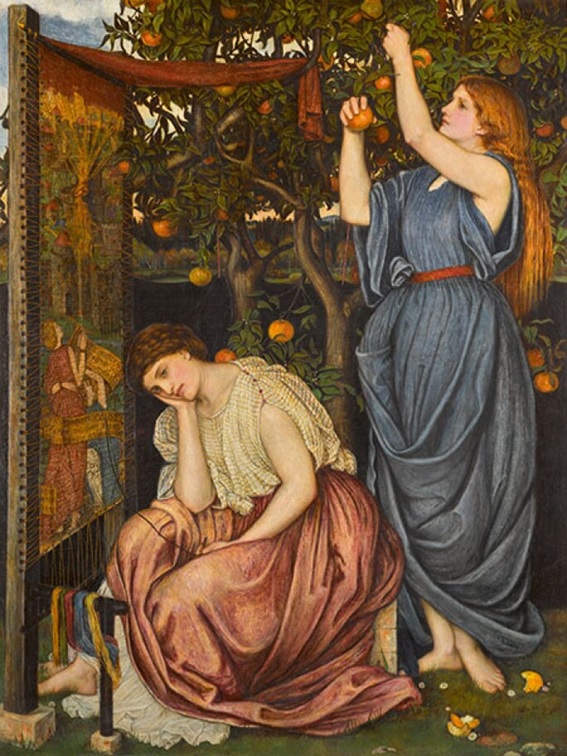
This paper aims to analyse ancient epic poetry used by (and in) contemporary literature for its own historical-fictional tradition of the womanhood. Such analysis intends to uncover one case of reception and the way it works, as reception is a procedure that covers a vast field. Here, it takes place within feminist literature focusing in Penelope— a character that could be seen as an allegory of reception theory as suggested by Vanda Zajko (2011: 195)—in the retelling of the Odyssey, The Penelopiad by Margaret Atwood (2005). Atwood uses a well-known story to examine the evaluation that Penelope herself makes of her own behaviour in relation to her fame. Desirous of a good reputation, the woman who waits patiently for her husband seems to be still afraid of her voice and her kléos.
Downloads
References
ANDÚJAR, Rosa. The Greek Trilogy of Luis Alfaro: Electricidad, Oedipus El Rey, Mojada. London: Bloomsbury Academic, 2020.
ASSUNÇÃO, Teodoro Rennó. Nota crítica à “bela morte” vernantiana. Classica. São Paulo, v. VII/ VIII, 1994-1995. p. 53-62.
ATWOOD, Margaret. The Penelopiad. Edinburgh; New York; Melbourne: Canongate, 2005.
ATWOOD, Margaret. The Penelopiad: The Play. London: Faber and Faber, 2007.
BRAUND, Susanna. ‘We’re here too, the ones without names.’ A study of female voices as imagined by Margaret Atwood, Carol Ann Duffy, and Marguerite Yourcenar. Classical Receptions Journal, V. 4, 2012, p. 190-208.
COLLINS, Shannon Carpenter. Setting the stories straight: A reading of Margaret Atwood’s The Penelopiad. Carson-Newman Studies, 11, 2006, p. 57-66.
DE JONG, Irene. A narratological commentary on the Odyssey. Cambridge, UK; New York: Cambridge University Press, 2001.
DETIENNE, Marcel. Qui veut prendre la parole ? Paris : Éditions du Seuil / Collection Le genre humain, 2003.
FLETCHER, Judith. J. Women’s space and wingless words in the Odyssey. Phoenix, 62, 2008, p. 77-91.
HALL, Edith. The Return of Ulysses. London and New York: I. B. Tauris, 2008.
HARDWICK, Lorna. Reception Studies. Oxford: Oxford University Press, 2003.
HAUSER, Emily. ‘There is another story’: writing after the Odyssey in Margaret Atwood’s The Penelopiad. Classical Receptions Journal, v. 10, 2018, p. 109-126.
KARAKANTZA, Effimia. Odysseia or Penelopeia? Mètis. Anthropologie des mondes grecs anciens, v. 12, 1997, p. 161-179.
LORAUX, Nicole. Notes sur un impossible sujet de l'histoire. Les cahiers du Grif, 37/38, 1988, p. 113-124.
MARTINDALE, Charles; THOMAS, Richard. Classics and the uses of reception. Oxford: Blackwell Publishing, 2006.
MARTINDALE, Charles. Redeeming the text: Latin poetry and the hermeneutics of reception. New York: Cambridge University Press, 1993.
NAGY, Gregory. Comparative Studies in Greek and Indie Meter. Harvard Studies in Comparative Literature, 33, 1974, p. 229-261.
OLSON, Douglas. Blood and iron: stories and storytelling in Homer’s Odyssey. Leiden; New York: E. J. Brill, 1995.
NIETZSCHE, Friedrich. Untimely Meditations. Edited by Daniel Breazeale. Translated by R. J. Hollingdale. Cambridge: Cambridge University Press, 2012.
SEGAL, Charles. Kleos and its Ironies in the Odyssey. L’Antiquité Classique, 52, 1983, p. 22-47.
PERALTA, Danel Padilla. Crises of Democracy at Columbia: Weaponizing the Classics (2019) Available at: https://www.youtube.com/watch?v=vjBs49285wM&t=1401s (Accessed 29 April 2021).
PERALTA, Danel Padilla. Darkness Visible: The hounted house of classics (2020). Available at: https://www.youtube.com/watch?v=sqbJl71H1t0&t=2921s (Accessed 26 April 2021).
PERALTA, Danel Padilla. Why “Why Classics”?, (2021) Available at: https://classics.stanford.edu/dan-el-padilla-peralta-why-why-classics. (Accessed 27 April 2021).
POSER, Rachel. He Wants to Save Classics From Whiteness. Can the Field Survive? The New York Times, February 2 (2021). Available at : https://www.nytimes.com/2021/02/02/magazine/classics-greece-rome-whiteness.html (Accessed 27 April 2021).
RABINOWITZ, Nancy Sorkin; RICHLIN, Amy (eds.). Feminist Theory and the Classics. New York; London: Routledge, 1993.
SUZUKI, Mihoko. Rewriting the "Odyssey" in the Twenty-First Century: Mary Zimmerman's "Odyssey" and Margaret Atwood's "Penelopiad". College Literature, v. 34, 2007, p. 263-278.
VERNANT, Jean-Pierre. La belle mort et le cadavre outragé. In: VERNANT, J.-P. L'individu, la mort, l'amour. Soi-même et l'autre en Grèce Ancienne. Paris : Éditions Gallimard, 1989.
ZAJKO, Vanda. ‘What difference as made?’: Feminist Models of Reception. In: HARDWICK, Lorna; STRAY, Christopher (eds). A Companion to Classical Receptions. Oxford: John Wiley & Sons, 2011, p. 169-217.
Downloads
Published
Issue
Section
License
Copyright (c) 2023 Lorena Lopes da Costa

This work is licensed under a Creative Commons Attribution 4.0 International License.
Authors retain copyright and grant the journal the right of first publication.
The works are licensed under the Creative Commons Attribution 4.0 International License (CC BY 4.0), which permits unrestricted use, distribution, and reproduction in any medium, including for commercial purposes, provided proper attribution is given.
Full license text: https://creativecommons.org/licenses/by/4.0/