
Rock-cut monasteries and hermitage in Eastern
a case study - Orheiul Vechi (Republic of Modova)
DOI:
https://doi.org/10.34024/herodoto.2021.v6.13801Keywords:
Rock-cut monastery, Hermitage, OrheiulVechi, The Republic of MoldovaAbstract
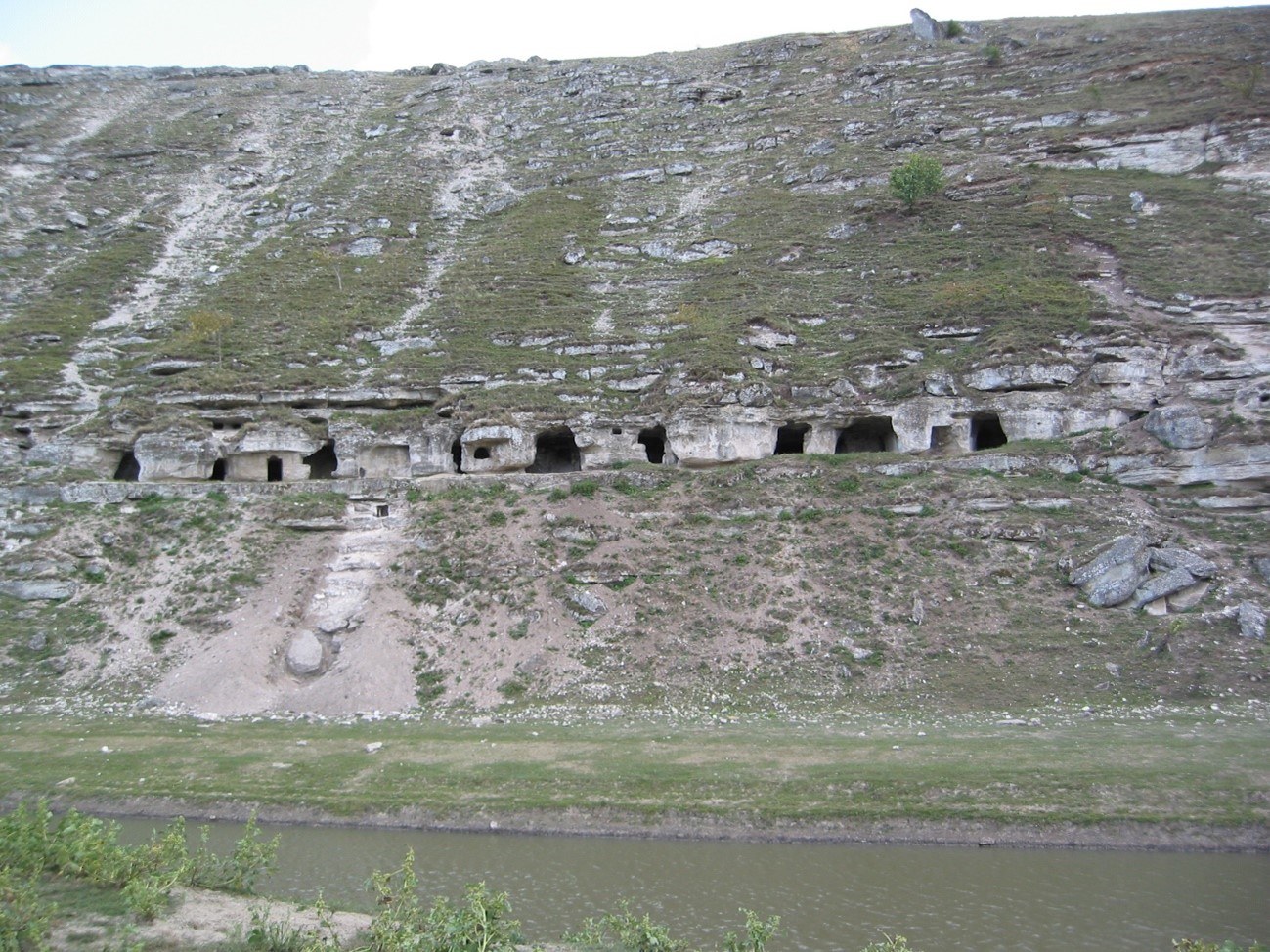
The paper discusses the rock-cut architecture phenomenon from the Republic of Moldova based on the case study of OrheiulVechi (Old Orhei). The landscape played the most important role in developing hermitages and monastic communities, their infrastructures, religious, social and economic activities. Another important aspect is the chronology, which is a debated question because written sources mention such sites very late and some scholars have been trying to link this phenomenon with early monasticism. The building time of these complexes is not clearly established, but their existence can certainly be framed with the medieval state of Moldova. In this context, it is particularly important to place the rock-cut sites from Moldova in their broader geographical context, which would mean an examination and presentation of the elements of such architecture from South-Eastern and Eastern Europe. The paper describes one of the most important hermitages from the Republic of Moldova, which is placed in the rock blanks of the Răut river. During Medieval time, the town of OrheiulVechi was an important administrative center and, probably in this context, a huge hermitage network was developed there, concentrated in six areas of the Răut river valley. Two of them are known as monasteries – Peștere and Bosie and the other ones as monks’ hermitages. During the last two decades, we have registered over 150 rock-cut cells. So, based on written and archaeological sources, the paper discusses the history of OrheiulVechi rock-cut hermitages, the role of the natural environment in their development and place in the context of an ecclesiastic system of Medieval Moldova.
Downloads
References
AFANAS’EV-ČUŽBINSKIJ, A. Poezdka v JužnujuRossiju, čast’ 2 (2nd part), OčerkiDnestra. Sankt Petersburg, 1863.
ANSAMBLURI MONASTIC. In: P. BALAN, V. DRUK, Artămoldovenească din veacurile XIV-XIX, Chişinău, p. 44-67, 1985.
ARBORE, Z. Basarabiaînsecolul XIX. Bucureşti, 1988.
ARBORE, Z. Dicţionarulgeografic al Basarabiei. Bucureşti, 1904.
BATJUŠKOV, P.N. Bessarabia. Sankt Petersburg, 1892.
BÂZGU, E. Mănăstirile rupestre dinbazinulfluviuluiNistru – artere de răspândire a creștinismului. Arta 1996, Chișinău, p. 98–105, 1996.
BÂZGU, E. Reevaluări cronologice ale complexului monastic rupestru Butuceni-Orhei. Arta ’97, Chișinău, p. 130–139, 1997.
BÂZGU, E. and SINHANI, T. Un schit rupestru necunoscut – Holercani-Mărcăuți. SUD-EST 4 (30), p. 86–89, 1997.
CERETEU, I. Biserici și mănăstiri din Moldova (secolul al XIV-lea și prima jumătate a secolului al XV-lea). Brăila: Muzeul Brăilei, Editura Istros, 2004.
CIOBANU, Ș. Biserici din Basarabia. AnuarulComisiuniiMonumentelorIstoricedinBasarabia I, p. 39–45, 1924.
CIOCANU, S. Bisericarupestră de lamănăstirealui Bosie dinOrheiulVechi, Basarabia. Arhitext Design 9–10, p. 44–47, 1998.
CIOCANU, S. Biserica rupestră de la mănăstirea lui Bosie de la Orheiul Vechi. Orheiul Vechi. Buletin istorico-arheologic 1998, p. 26–30, 1999.
CIOCANU, S. Schitul Peștera și moșia Peștera (Orheiul Vechi) din ținutul Orhei (de la primele atestări documentare pânăîn secolul al XIX-lea). Tyragetia s.n. vol. 2 (XVII), no. 2, p. 141–162, 2008.
CIOCANU, S. Schitul Trebujeni (al lui Bosie Pârcălab) și moșia Trebujeni/Butuceni din ținutul Orhei. Tyragetia s.n. vol. 3 (XVIII), no. 2, p. 89–109, 2009.
CIOCANU, S. Schitul Mășcăuți/Micicăuți (al lui Albu Pârcălab) și Moșia Mășcăuți din ținutul Orhei. Tyragetias.n. vol. 5 (XX), no. 2, p. 119–138, 2011.
DEMCENCO, N., I. HÎNCU, T. NESTEROV, P. RAILEAN, I. CHIRTOACĂ and I. BOBEICO. Monumente de istorieșiculturădin Republica Moldova. Chișinău: Știința, 1993.
DUMBRĂVEANU, A. Vestigiiarheologice sub impact antropic. Sud-Est 4 (30), p. 82–85, 1997.
EȘANU, A. (ed.) Mănăstiri și schituri din Republica Moldova: studii enciclopedice. Chișinău: Institutul de Studii Enciclopedice, 2013.
GHIMPU, Vl. 1998. Mănăstiri rupestre din Orheiul Vechi. Tyragetia VI–VII, p. 35–42, 1998.
GHIMPU, Vl. Biserici și mănăstiri medievale în Basarabia. Chișinău: Tyragetia, 2000.
GROSU, V. and C. VASILACHI. Semnele lapidare din peșterile de la Butuceni. Sud-Est 4 (30), p. 76–81, 1997.
GROSU, V.G. and K.G. VASILAKI. Lapidarnye znaki Butučenskih peščer. Izvestija Akademii Nauk Moldavskoj SSR. Serija obščestvenyh nauk 3, p. 61–69, 1984.
HALIPPA, I.N. Svedenija o drevnostjah Bessarabii sobrannye Voennym Gubernatorom P.I. Fedorovym v 1837–1838 gg., in Trudy Bessarabskoj Gubernskoj Učonoj Arhivnoj Kommissii, vol. 2, p. 98–114. Kišinev, 1902.
HALIPPA, I.N. Sostojanie cerkvej v 1812–1813 g., in Trudy Bessarabskoj Gubernskoj Učonoj Arhivnoj Kommissii, vol. 3: 242–298. Kišinev, 1907.
ILVIȚCHI, L. Mănăstirile și schiturile din Basarabia. Aspect comparativ arhitectural.Chișinău: Museum, 1999.
KURDINOVSKI, V. Cele mai vechi biserici din Basarabia. Revista SocietăţiiIstorico-ArheologiceBisericeşti, vol. XVI, Chişinău, p. 18–43, 1925.
KURDINOVSKIJ, V. OkrestnostiStarogoOrheja. KišinevskieEparhal’nyeVedomosti 41, p. 1313–1317, 1906.
KURDINOVSKIJ, V. Obščijočerk o peščernyhhramahBessarabii. DrevnejšiekamennyehramyBessarabii, in TrudyBessarabskogoCerkovnogoIstoriko-ArheologičeskogoObščestva, 10 vyp. (10thissue), Kišinev, p. 1–11, 1918.
MUSTEAȚĂ, S. Studiuasupramănăstirilor rupestre din Republica Moldova. Consideraţiiistoriografice. AnaleleAsociațieiNaționale a Tineriloristoricidin Moldova 6, p. 197–202, 2005.
MUSTEAȚĂ, S. Rock-cut monasteries – original landscape for a specific religious environment. A case study of Republic of Moldova, in P. Kołodziejcyzk, B. Kwiatkowska-Kopka (eds), Cracow Landscape Monographs 2. Landscape as Impulsion for Culture: Research, Perception & Protection, Landscape in the Past & Forgotten Landscapes, vol. 2, Kracow, p. 141–153, 2016.
NAKKO, A. IstorijaBessarabii s drevnejšihvremen. Odessa, 1876.
NAUKOVA KONFERENCIJA. Skeli j pečeri v istoriyj ta kul’turistarodavn’ogonaselennjaUkrajyni(Scientific ConferenceRock and Caves: their importance for the study of the Ancient History of Ukraine), L’viv, 2–3 ljutogo 1995 roku, Zbirnik tez povidomlen’ ta dopovidej. L’viv, 1995.
POSTICA, Gh. (ed.) Peisajul cultural Orheiul Vechi. Chișinău: CEP USM, 2010.
POSTICA, Gh. Arhitectura sacră rupestră în contextul civilizațiilor sud-est europene. Sud-Est 4 (30), p. 5–9, 1997.
POSTICA, Gh. Mănăstirile rupestre de la Orheiul Vechi. Orheiul Vechi. Buletin istorico-arheologic 1998, p. 20–25, 1999.
POSTICA, Gh. and V. KAVRUK. OrheiulVechi Archaeological Landscape. Chișinău: S.n., 2018.
SÂRBU, M. OrheiulVechi. In: T. Țopa and V. Trofălă (eds) Mănăstiribasarabene. Chișinău: edituraUniversul, p. 233–241, 1995.
SKAL’NYE MONASTYRI. In: Ja. N. Taras, PamjatnikiarhitekturyMoldavii (XIV-načalo XX veka), Kišinev, p. 107-120, 1986.
TARAS, Ja.N. PamjatnikiarhitekturyMoldavii (XIV–načalo XX veka). Kišinev, 1986.
VEL’TMAN, A. Kostešskieskaly. OdesskijAl’manah. Odessa, 1840.
XENOFONTOV, I. ComplexulmonahalJapca. Istorieșispiritualitate. Chișinău: LUMEN, 2015.
ZAŠČUK, A. MaterialydljageografiiistatistikiRossii, Bessarabskaja oblast’,čast’ 2. Sankt Petersburg, 1862.
Downloads
Published
Issue
Section
License
Copyright (c) 2022 Sergiu Musteață, Gheorghe Postică

This work is licensed under a Creative Commons Attribution 4.0 International License.
Authors retain copyright and grant the journal the right of first publication.
The works are licensed under the Creative Commons Attribution 4.0 International License (CC BY 4.0), which permits unrestricted use, distribution, and reproduction in any medium, including for commercial purposes, provided proper attribution is given.
Full license text: https://creativecommons.org/licenses/by/4.0/