https://doi.org/10.34024/prometeica.2022.Espepcial.14120
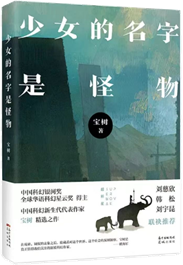
BAOSHU. O NOME DA MULHER É MONSTRO. GUANGZHOU, CHINA: HUACHENG PUBLISHING HOUSE, 2020. ISBN: 9787536090361
BAOSHU. EL NOMBRE DE LAS DONCELLAS ES MONSTRUO. GUANGZHOU, CHINA: HUACHENG PUBLISHING HOUSE, 2020. ISBN: 9787536090361
(Department of Philosophy, Xi’an Jiaotong University, China)
Recibido: 25/07/2022
Aprobado: 28/07/2022
Enthusiasts for AI have held out the prospect that robots will live with people, relate to people, respond to people, and even substitute people when people fail. Robots are more trustable, predictable, and less demanding than human companions. In this way, AI technology seems to be the salvation for the problems of human intimacy in our digital age. Media and commercial culture always encourage people to put hope in new machines, although the meaning of robot companion is far from clear. As Sherry Turkle points out in Alone Together, the keenness for robot companion is a subtle, ambiguous, and very complex mix: “social robots serve as both symptom and dream: as a symptom, they promise a
way to sidestep intimacy conflicts; as a dream, they express a wish for relationships with limits, a way to be both together and alone.” A crucial question arises: When people are keen to substitute robots for humans, what are they going for?
Baoshu, a well-known Chinese science fiction writer, attempts to answer this question by telling a sad and touching story in his novelette “Niuniu,” which is included in his personal anthology Maidens’ Name is Monster. In Chinese, “Niuniu” means an innocent and lovely little girl and is a widespread name or nickname for such a girl. “Niuniu” in this novel refers to the male protagonist (Dong Fang)’s two-years- old daughter, who died in a tragic accident for which his wife (Shen Lan) should take responsibility. The parents were so desperate that they ordered a robot simulacrum, a replica of Niuniu based on all the photos, videos, and other data of Niuniu, made by a cutting-edge technology company. Nevertheless, the artificial replica had a limit, i.e., she could never grow up. Instead, the machine could only imitate all that had happened, the life cycle of Niuniu from one to two years old, and then go back to where she had started and repeat the cycle again and again.
At first, the couple was immersed in bliss for having little Niuniu “revived”. As time went by, however, their opinions diverged significantly concerning the authenticity of this robotic Niuniu. The husband gradually concluded that this artificial person is merely a machine in essence, or to put in his words, “a
1 This research is supported by the National Social Science Fund of China (国家社会科学基金项目) (grant no. 20BZX127).
3D video of Niuniu’s life”. Therefore, it is deceiving. In contrast, the wife felt everything was real2: This new Niuniu was as much real as the love and care she felt for her baby all the time.
Who is right on this issue, Dong Fang or Shen Lan? Maybe both of them are right, considered from different perspectives. Dong Fang is correct in terms of the robot’s objective characters. However, Shen Lan’s reaction is more significant and worth reflecting on deeply. While recognizing that algorithms control all speech and actions of this new Niuniu, she insisted that this robotic Niuniu was real because her emotional attachment was so real, to the extent that this Niuniu served as a “time machine.” As Shen Lan put it beautifully, “She takes us back to those times with Niuniu. Every word, every smile, all just like Niuniu’s. We never let go of Niuniu. She’s been with us all along.”
Her reactions are in accord with the latest scientific findings. Just as babies can immediately understand the meaning of parents’ facial expressions without reasoning, humans are very easily apt to anthropomorphize human-like robots, feel empathy for them, and thus develop emotional bonds with them. Furthermore, this empathetic connection between robots and humans usually develops automatically and subconsciously: people subconsciously treat computers as having personalities and apply social rules and expectations to computers.
Does this mean the blurring border between reality and virtuality no longer makes sense? Definitely no. As far as I can see, this story contributes great insight to this question by pointing out that temporality dramatically distinguishes real humans from the robotic imitation of humans. Humans exist essentially temporally, whereas robots cannot “grow” in time. This ontological-existential gap between humans and robots calls into question the idea of substituting companion robots for real humans. Confusing robotic companions and human companions may lead to the moral hazard of being dehumanized by machines. The robot’s face certainly announces an ethical and emotional appeal to us, just as how Shen Lan felt about the robotic Niuniu, but it has no meaning when we feel it for a machine. When we begin to talk to robots humanly, when we respond to these robots as “persons,” we might dehumanize our existence by being reduced and confined to “as if,” oblivious of what is unique about being human—what is most important, the capability of existing temporally in a genuine way. This perspective is how Dong Fang felt “trapped in a long-gone past, unable to escape as if they’ve fallen into the warped space-time of a black hole” when his wife was so addicted to caring for the robotic Niuniu that she did not want a second pregnancy.
What could we learn from the dilemma confronting this unfortunate couple? In my view, three points deserve people’s serious reflection.
First, we should be cautious of the two-sided nature of technology. Technology is a double-edged sword. In some cases, its promise of empowering people to confront the world’s challenges turns out to be the most profound form of dis-empowerment. By pointing out the attachment with the robot, Shen Lan creates an illusion of manipulating time, travelling through time back to five years ago, at the price of being trapped in the past and thereby deprived of the authentic meaning of life.
The second point raises ethical issues concerning deception. Companion robots make us believe that they deserve our empathetic feeling of being-with, but they are merely machines that have no genuine response to us. This view is why Dong Fang thought that the robotic Niuniu was deceiving. One objection to this deception claim is that a machine cannot deceive since it is not conscious, not to mention the intention of deceiving. However, this objection misses the crucial point of human-robot interactions. What is at stake in the human-robot interaction is not the state of mind or any properties considered in isolation, but the consequences of the relationship, especially the self-being of the moral agent constituted through this ongoing relationship. Strictly speaking, people are not deceived by the robot but by themselves, and this self-deception, in Sartre’s sense, is the morally problematic point.
2 The term “real” it is used as opposed to a replica deceiving the user.
Sartre construes self-deception as a kind of false faith in the mode of his own existence, resulting in disowning his/her innate freedom to act authentically. If people falsely believe in the importance of getting recognized and responded to by companion robots, they will eventually suffer social and psychological impoverishment on the long run.
Third, this story indicates what is at stake in discussions about social robots. It is not the objects in themselves but their relationship with the user. The first and foremost central questions are how we feel about being with robotic companions and how we are changed as technology offers us substitutes for human companions. Surely there are no standard answers for these questions but to some extent dependent on particular users in particular situations.
This aspect might explain why the controversy surrounding robotic companions and the artificial person seems unsolvable in the real world.
At this point, we might be able to propose an answer to the question raised at the beginning of this review. When people substitute robotic companions for human companions, what they are going for is nothing but illusions, or even worse, endless nightmares, as this family is caught up in. Baoshu’s “Niuniu” productively and strikingly illuminates the vicious circle caused by the misuse of AI. On the one hand, because human beings are so vulnerable, we desperately appeal to technology as the last resort for dealing with the hardship and distress in life; on the other hand, human beings become even more vulnerable when we uncritically accept the domination of AI in our life. This unexpected ending stimulates readers to think deeply about the nature of robot simulacra and robotic companions: Whether it is symptom or promise, cure or curse? Other science fiction stories collected in this anthology also provoke readers to think further about how technology will reshape our lives and whether it offers us the lives we desire to lead. It is time to begin thinking about these questions together if we do not want to leave our future to be dominated by machines.